 by UNI-Prep Institute · Updated October. 28, 2026
Many people dream of working as an English teacher in Europe. If you want to gain work experience in a European country while teaching English, Poland can be a promising destination. There are opportunities in many areas: language schools, private education centres, international schools, private tutoring, even corporate English training.
But good English alone won't get you a job. Your educational qualifications, TEFL/TESOL certificate and experience will of course be looked at, but the biggest question is whether you have legal permission to work. A new law on hiring foreign workers came into force in Poland in June 2025, and many government fees went up in 2026. So before you start applying, it's a good idea to get the full picture of salary, qualifications, work permits and visas. In this article we'll cover:
Why TEFL teaching in Poland is becoming popular
What qualifications you need
Monthly salary by type of institution
Taxes and contract types for English teachers
Visas and work permits (including the new 2026 rules)
Cost of living
Which cities have the most job opportunities
How and where to look for jobs
How to avoid recruitment scams
How realistic this is for non-EU candidates
I hope this article will be useful if you want to teach English in Poland.

1. Why is TEFL teaching in Poland becoming popular?
English is the foreign language students learn most in Polish schools, so demand for teachers exists all year round. Added to this is the fast-growing business services sector. According to the 2026 ABSL report, at the end of the first quarter about 500,000 people were working in Poland's 2,179 service centres. Warsaw and Kraków have about 100,000 workers each, followed by Wrocław and the Tri-City area. For employees of these IT, finance and outsourcing companies, demand for business English is naturally high. Here there are opportunities to teach not just in classrooms but also at company offices or online. Many teachers teach business English at a company in the morning and at a language school in the evening.
Another attraction is the cost. By one guide's calculation, a teacher earning 6,000 zł a month in Kraków can live much better than in Western Europe by comparison. Some TEFL guides also say that non-EU teachers can work in Poland if the employer agrees to sponsor them, but the process isn't easy and changed after the 2025 new law.
2. What qualifications do you need to teach English in Poland?
a) TEFL certificate (120 hours)
A TEFL certificate isn't legally required to teach English in Poland, but most language schools expect one. In Poland's competitive job market, these certificates are considered one of the primary and most important qualifications for teaching. It's the minimum standard qualification for jobs at most private language schools or academies in Poland. If you've completed a recognised or accredited online or offline TEFL course of at least 120 hours, you can find a job in Poland easily.
b) Bachelor's degree
A bachelor's degree in any subject is mandatory for state schools, universities and for applying for a work visa (work permit). However, it's possible to teach at some private language schools even without a degree.
c) What if you're not a native speaker?
It's possible to work as an English teacher in Poland without being a native speaker. There are plenty of opportunities for non-native speakers at private language schools and various organisations in Poland, but in that case some extra conditions must be met as proof of qualification. You must be able to speak and write English with native-like fluency. Your pronunciation must be clear. You need at least CEFR level C1 or C2 in English. You need good scores in IELTS or TOEFL. The reality is that schools consider EU candidates first because there's less paperwork hassle, so your CV must be clearly good, not average, so that they consider you more qualified than all the others.
d) Polish language?
Knowing Polish isn't required for English teaching jobs in Poland, but knowing it makes it easier to find work. Knowing Polish makes it easier to communicate with locals and fit into the city. And to apply for permanent residence after 5 years you need B1 Polish, so if you start learning from the beginning, the benefit is yours.
3. Monthly salary by type of institution
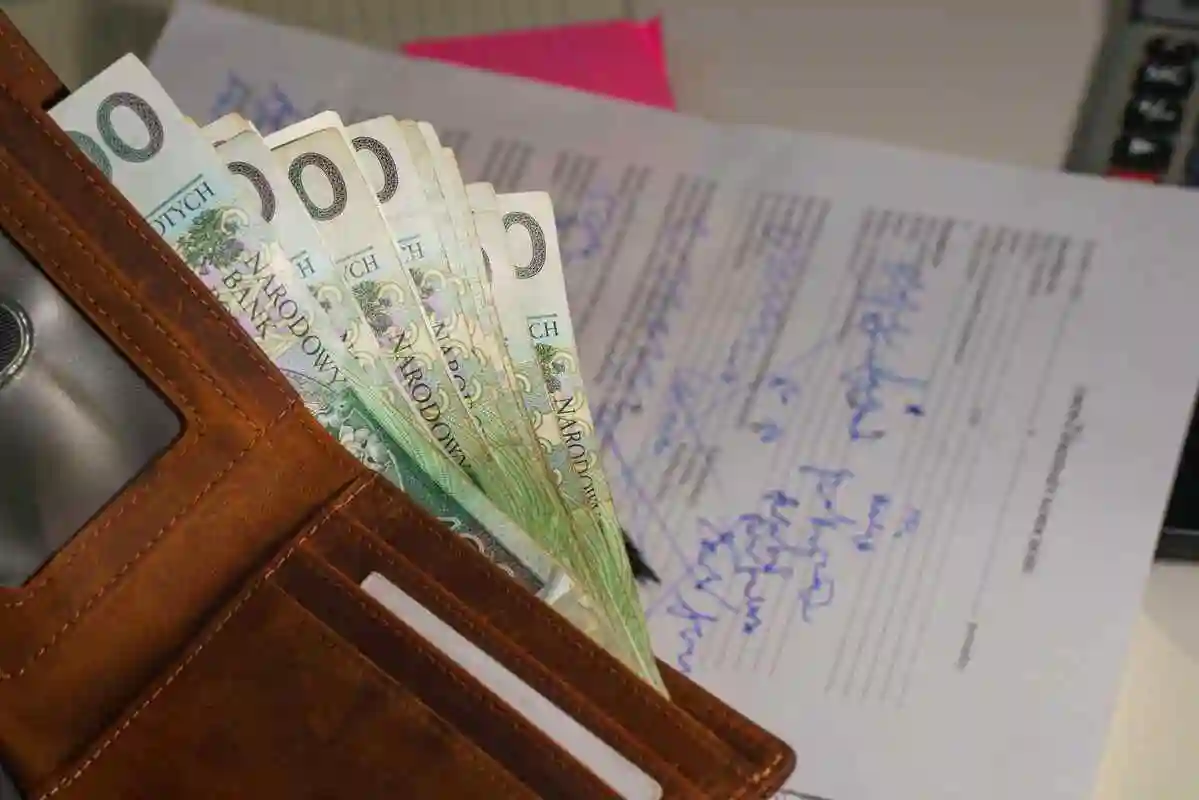
On average, Poland's gross monthly salary in 2026 is about 9,250 zł (GUS, August 2026), and the median about 7,530 zł. But an English teacher's pay depends heavily on the institution, city and experience.
Private language schools: The easiest entry point for foreign teachers. Typical gross pay is 4,000–7,500 zł (about 1,100–2,050), in most cases 4,000–6,500 zł. Newcomers start at the lower end. With CELTA or Level 5 you can get up to 9,500 zł. For non-EU teachers, a full-time permit requires a gross salary of at least 4,806 zł, so offers below this don't apply to you.
International schools: 8,000–15,000 zł (about 2,200–4,100), up to 20,000 zł at top schools. Requires a degree, teaching licence and experience.
Universities: Approximately 4,000–8,000 zł, usually requires a master's degree.
State schools: Requires a degree and teaching licence, so this isn't an easy route for new foreign teachers.
Hourly income
Private tutoring: 80 to 150 zł per hour (about $22 to $41)..
Corporate/business English: 100 to 200+ zł per hour, in some cases even more than 200 zł. This is where the rate is highest, and most corporate work comes through language schools or freelance, as extra income on top of the school salary.
Job type |
Gross salary |
Approx. USD |
Notes |
Private language school |
4,000–7,500 zł/month (typically 4,000–6,500) |
1,100–2,050 |
Easiest entry point, newcomers at the lower end. Up to 9,500 with CELTA |
International school |
8,000–15,000 zł/month (up to 20,000 at the top) |
2,200–4,100 |
Requires a degree, teaching licence and experience |
University |
4,000–8,000 zł/month (estimate) |
1,100–2,200 |
A master's is usually preferred; estimates vary by university |
Private tutoring |
80–150 zł/hour |
22–41 |
Main source of extra income |
Corporate/business English |
100–200+ zł/hour |
27–55 |
Highest rate, mostly through schools or freelance |

4. Taxes and contract types for English teachers
The base pay of teachers at Polish state and ordinary schools is comparatively low, so even experienced teachers usually don't depend on a single salary. To cover costs, they keep multiple sources of income.
Gross vs net
Income tax (PIT): 12% up to 120,000 zł a year, 32% above that. Tax-free allowance 30,000 zł.
Employee ZUS: 13.71%
Health insurance (NFZ): 9%, which is not deductible from tax.
In practice: about 69–75% of gross reaches your hands.
Example: 8,000 zł gross → about 5,784 zł net. Minimum wage 4,806 zł gross → about 3,606 zł net.
Contract types: check before accepting an offer
-
Umowa o pracę (employment contract): Protected under Polish labour law. You get leave, a notice period and full ZUS. It also provides the strongest basis for a visa application.
-
Umowa zlecenie (mandate contract): Often used at language schools. In 2026 the minimum is 31.40 zł/hour gross.Offers fewer benefits but provides greater flexibility.
-
B2B / JDG (self-employed): You're not an employee but an independent contractor. You keep more money, but you have to handle ZUS and tax yourself. Full ZUS is about 1,927 zł a month (social) + at least 433 zł (health). The first 6 months are relieved, and the next 24 months are at a reduced rate of about 456 zł. Not for newcomers (ZUS 2026, Progress Holding, UniConsulting).
5. Visas and work permits: the new rules for 2026
Visas and work permits for teaching in Poland can generally be obtained, but it depends entirely on the employer's or institution's sponsorship and on your qualifications. It can be somewhat complicated for new or international applicants, because many institutions don't want to sponsor newcomers directly from abroad.
EU/EEA/Swiss citizens
They don't need a visa or work permit and can start work directly. However, if you stay more than 3 months, you must register your stay at the Voivodeship Office (Urząd Wojewódzki) . This is free, and must be done by the day after the 3 months are complete. After this you can get a PESEL number.
Non-EU citizens
They need two separate things, so don't mix them up:
Work permit (usually Type A): Permission to work. The employer applies.
-
D-type national visa or residence permit: Permission to stay, which you apply for yourself at the consulate.
Major changes of 2025–26 (this is where many old blogs are wrong)
-
Labour market test abolished: Since 1 June 2025 the employer no longer has to prove that no Polish candidate was available. Instead, there is room to create lists of restricted occupations at the district level.
-
Everything online: Work permit applications, appeals and decisions are all handled through the praca.gov.pl portal . From 2026, residence permit applications must also be made online on the MOS portal.
-
Contract submitted in advance: A copy of the signed contract must be submitted online before work starts. For contracts written only in a foreign language, a Polish sworn translation is also required.
-
Some visas no longer allow work: Under the new law, Schengen visas from other countries and some national visas no longer give the right to work. As a result, a visa issued for work has effectively become the only route for many categories. Some older guides still say "you can enter on a tourist visa, get a job and then get a permit," but under the new rules that is no longer a reliable route. Confirm with the consulate or a lawyer what applies in your case.
-
Strict monitoring: The National Labour Inspectorate (PIP) and the Border Guard can carry out surprise inspections together, and for illegal hiring the employer's fine is 3,000 to 50,000 zł per foreign worker. So legitimate schools are now stricter with paperwork.
Minimum salary: what level keeps a work permit valid
In 2026, a full-time work permit requires a salary of at least 4,806 zł gross, which is this year's national minimum wage. Your contract terms (salary, working hours) must match the permit. So ask the school whether a permit can be obtained for your type of contract.
Government fees (2026)
Item |
Fee |
Note |
Type A work permit |
200 zł for up to 3 months, 400 zł for longer terms |
Filed by the employer on praca.gov.pl |
Temporary residence and work permit |
440 zł application fee + 100 zł residence card fee |
Other temporary residence purposes: 340 zł. Applications are filed on the MOS portal |
D-type national visa |
€200 (previously €135) |
From 1 January 2026. Visa-centre service charges (about €30–50) may be extra |
A caution on fees: In a 2024 notice from Poland's Ministry of Foreign Affairs, the D-visa fee was written as €135, and many agent sites still say €80–90. According to newer sources the fee is €200 from 2026. Trust only official mission pages, and check the fee before paying at the consulate.
Step-by-step process (for non-EU applicants)
-
Job offer: First you need a valid teaching offer. Remember that some schools don't want to go through the work permit hassle at all, so ask in the interview whether they sponsor non-EU teachers.
-
Employer applies for the permit: You can't apply yourself. The employer applies on praca.gov.pl, and a decision usually takes 1 to 3 months.
-
Visa application: Once you have the permit, you apply for a D-type visa at the Polish consulate in your own country. Filling in the form and booking the appointment is done on the e-Konsulat portal . A decision on a national visa can take up to 60 days.
-
Alternative route: In some cases the employer can choose to apply for the residence and work permit together (temporary residence and work permit). Confirm with the school and the consulate which route applies in your case.
-
Documents and biometrics: Generally required: passport, work permit, employment contract, degree and TEFL certificate (with translation if needed), police clearance, travel health insurance, proof of accommodation and of financial means. The list can differ by consulate, so check it against the list from your country's mission.
-
After arriving in Poland: Register your address and get a PESEL number , then open a bank account. Confirm with your employer that your ZUS registration is happening.
-
Longer stay: A D visa is valid for a maximum of 1 year. After that you need a temporary residence permit (karta pobytu), valid for a maximum of 3 years. It's safest to submit the documents at least 45 days before the visa expires.
-
Permanent residence: After 5 years of continuous legal residence you can apply for a long-term EU resident permit. This requires a B1 Polish certificate and proof of stable income for the previous 3 years.
6. Cost of living: how far does the salary actually go
Although the cost of living in Poland is quite a bit lower than in Western European countries, in recent years costs have gone up quite a lot because of inflation. Based on the current economic situation, here is a detailed breakdown of living costs in Poland:
Cost |
Approx. (zł/month) |
A room in a shared flat |
Warsaw 1,400–2,200; Kraków 1,200–1,900; Wrocław 900–1,700 |
1-bedroom, Kraków (centre) |
3,200–3,400 |
1-bedroom, Wrocław (centre) |
3,000–3,200 |
1-bedroom, Warsaw (centre) |
3,500–5,000 (typically 4,000–4,400) |
Groceries |
800–1,400 |
Monthly public transport pass |
99–110 (Warsaw zones 1+2: 180) |
On top of the advertised rent comes a separate administrative charge (czynsz administracyjny), which typically adds 700 to 1,200 zł for a small apartment in Warsaw. So ask for the total rent figure.
7. Which city to choose
Choosing a city for teaching in Poland (especially English or international languages) mainly depends on your financial goals, lifestyle preferences and experience. Three main cities are considered the best for teaching in the country:
Warsaw — Poland's capital, Warsaw, is the biggest and most lucrative market for teaching. It has the most jobs, the most corporate clients and the highest rents. It has the most international schools. Because of the presence of multinational companies, there is huge demand for business English and corporate training.
Kraków — One of Poland's most historic and beautiful cities, very popular with teachers and tourists. There's a huge number of university students here, so there are many opportunities for language schools and private tutoring. Demand is especially high for exam preparation and academic English teaching.
Wrocław — This city is considered one of Poland's best places to live, for its quality of life and modern atmosphere. It's a fast-growing tech or IT hub. As a result, good quality teachers are sought to teach English to professionals in the technology sector.
8. Where to look for jobs and when
Choosing the right platform for finding teaching jobs in Poland, and knowing the right time to apply (recruitment season), is very important. Details below:
a. For international schools (high pay and benefits):
-
Tes.com : One of the best platforms in the world for schools with British and international curricula.
-
Teacher Horizons: One of the best platforms for jobs at Poland's well-known international schools (such as British, American or IB curriculum).
-
Teach Away: Very popular with teachers worldwide. Circulars from various schools in Poland are published here regularly.
b. For English teacher or ESL (English as a Second Language) positions:
-
Serious Teachers: Recruitment notices from Poland's private kindergartens, Montessori schools and language schools are found here most often.
-
Pracuj.pl: This is Poland's biggest local job portal. Type "Teacher" or "Nauczyciel" in the search bar and filter, and you'll find a huge number of school and coaching centre jobs.
-
Glassdoor Poland and LinkedIn: For direct contact with educational institutions in big cities like Warsaw, Kraków or Wrocław, LinkedIn and Glassdoor are quite effective.
c. When should you search?
Poland's school year generally runs from September to June. Around this, teachers are mainly hired in two main periods:
-
Main hiring period (May to August): For the new school year starting in September, schools generally begin interviewing from May–June and finalise hiring by August. This is the best time to apply.
-
Mid-year hiring (December to January): When a teacher leaves or a new batch starts, some schools hire new teachers again in December–January for the January/February semester.
9. Risk and scam-avoidance checklist
Fake "work permit" rackets are very active in Poland's job market. After receiving any offer letter, check it against the checklist below:
-
Asking for money upfront (the biggest red flag): Under Poland's labour law, no legitimate employer can take money from a candidate in advance as a fee for giving a job or for processing a work permit. If anyone asks for money upfront while guaranteeing a job or visa, it's definitely a scam.
-
Verify the agency's licence (KRAZ number): If you're talking through an agency in Poland, ask for their KRAZ number. Then go to the Polish government's official KRAZ Register website and search to confirm the agency is registered.
-
Verify the school or company (KRS/REGON/NIP): To check the genuineness of the institution that sent you the offer letter, search for their tax number (NIP) or registration number in Poland's National Court Register (KRS) or the CEIDG database. Check that the company exists and its current status is active.
-
Verify the official work permit (Voivode stamp): A genuine work permit is issued by Poland's regional government office (Voivodeship Office). It carries an official seal, a reference number and a clear signature. Don't trust blurry photos sent on WhatsApp or edited scans.
-
Verify through e-Konsulat: After you get the work permit, enter the permit's reference number when filling in the preliminary visa form on the Polish government's official e-Konsulat portal. If the permit is fake, the system will cancel or reject it immediately.
-
Contract: Along with Polish, the contract must also be in English. Don't sign any document you don't fully understand. The contract must clearly state your job title, working hours and salary amount.
-
Keep your passport with you: No agency or intermediary can hold your original passport on the pretext of "arranging the visa" or "document verification." This is completely illegal under Polish law and is treated as a sign of human trafficking.
10. How realistic is this for non-EU candidates?
In short: partly realistic, but challenging, and it needs time and planning.
-
More competition: Schools give priority to EU candidates because they have no visa-sponsorship hassle. Many schools do hire non-EU teachers and help with permits, but the number is limited.
-
Finding an employer: The process of hiring non-EU teachers is well established at chain schools like International House and the British Council. It makes sense to apply to them.
-
Qualifications: In practice you need a degree, a 120-hour TEFL and near-native English (including IELTS/TOEFL). International schools and universities require a teaching licence or a master's along with the degree. Opportunities for foreign non-EU teachers in state schools are limited.
-
Minimum salary: An offer below 4,806 zł gross won't get a work permit. So low-paid hourly work alone can't be the basis for a visa.
Time: Allow 3 to 4 months for the whole process, and also set aside money for fees and translations.
With a strong CV, applying at the right time (May–August) and targeting schools that have sponsorship experience, your chances go up a lot.
Final words
Teaching English in Poland is no longer just a dream. In cities like Warsaw, Kraków or Wrocław the job market is genuinely open, the pay isn't bad, and it can be an excellent gateway into Europe. But wanting it isn't enough. Applying at the right time, choosing trustworthy platforms and avoiding scam traps are the real challenges here.
Under the new rules the work permit and visa process is more online, more document-based than before, and the fees have gone up as well. So it's wise to think carefully about cost, time and the employer's cooperation before going ahead.
The first and most important step on this journey is to earn a recognised TEFL/TESOL certification, which most Polish language schools and employers expect. With Uni-Prep Institute's online TEFL/TESOL course you can study from home and prepare for teaching opportunities in Poland and around the world. Whichever provider you choose, make sure the course is at least 120 hours and offered by a recognised institution.