 by UNI-Prep Institute · Updated October. 7, 2026
In Taiwan, it's a popular way for foreign teachers to start working at a buxiban , but what exactly is a buxiban, and what do you need to do to get a job here?
In Taiwanese, "buxiban" means a cram school or extra coaching center, where students who have returned from school come for extra study. English is the most in demand, so there is no shortage of opportunities for qualified English teachers.
In this article, we'll look at: what kind of institution a buxiban is, what kind of teaching experience you can expect, and what you should look for when looking for a job.
What Is a Buxiban in Taiwan?
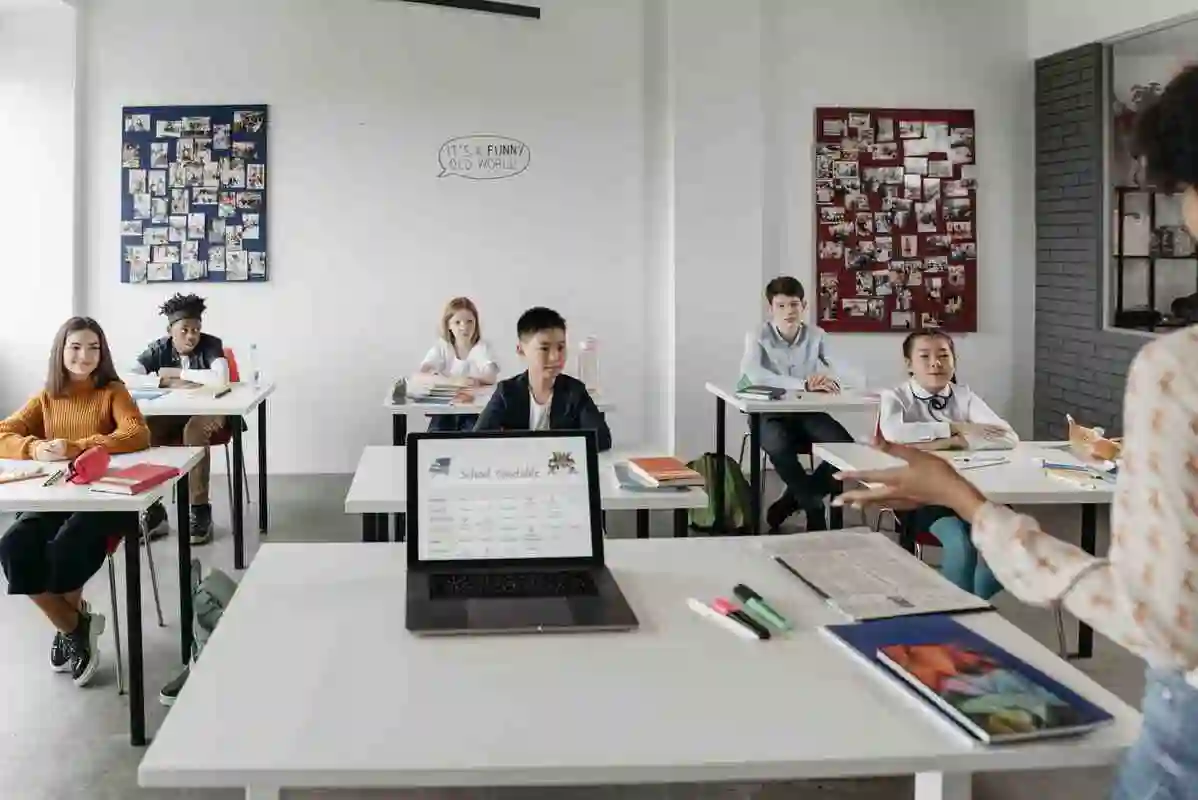
Many students in Taiwan don't finish school after school. In the afternoon or evening, they go to Buxiban, that is privately run small-scale learning centers, also known as cram schools in English. The name simply means extra or supplementary classes.
Math, science, music, entrance exam preparation, they're all taught here. But English is in high demand, and that's why most opportunities for foreign teachers are created in this sector. Some students come two days a week, some almost every day; classes can go on until late at night.
What's the difference? Public schools follow a set national curriculum. Buxiban operates according to market rules,parents pay, expect results in return, and institutions have to compete with each other. As a result, students balance the two systems, formal learning during the day, extra preparation in the evening.
Buxiban vs Government Schools in Taiwan: What’s the Difference?
Buxibans do not fall under the government education framework. They are privately owned institutions, and this one thing gives rise to all the other differences, from the objectives to the atmosphere inside the classroom. Government schools have to follow the national curriculum and a specific academic year schedule. Buxiban 's calculation is different. Here the main goal is the same, to show visible results to the parents who are paying.
This service-oriented mentality changes the face of the class. Depending on what kind of students the institution is attracting, how they present themselves. The emphasis is sometimes on test scores, sometimes on fluency in speech, sometimes on building confidence. Parents want to see progress, so the pressure falls on both the student and the teacher.
Compared to government schools, Buxibans tend to have a more flexible and results-oriented learning environment, with greater emphasis on meeting students' and parents' expectations.
What is typically found in Buxiban is:
a. Smaller class sizes: usually 6 to 15 students
b. Relaxed teaching style, although many institutions have their own set curriculum
c. Faster pace of learning, as students learn the core subjects once in school
d. More emphasis on participation and oral practice
As a teacher, your job will be to keep the class enjoyable and productive at the same time, using your creativity within the prescribed framework. The environment is certainly more commercial, but in return you get hands-on teaching experience and the opportunity to work closely with students.
What Does an English Teacher Do at a Buxiban in Taiwan?
As a foreign teacher in Buxiban , you will mainly take English classes, and the emphasis will be on four areas: speaking, listening, reading and writing. Responsibilities vary depending on the institution you are working at. The younger class may have to start with phonics, while older students may have to handle grammar or test preparation like TOEFL, GEPT.
Don't worry too much about materials. Most Buxiban provide their own curriculum and textbooks. But it is entirely up to you to adjust them according to the level of the students and keep the class lively.
Some jobs outside of teaching may include:
a. View homework and update class records
b. Creating student evaluations or small-scale report cards
c. Sometimes sitting with parents or staying at an open house
d. Self-discipline in the classroom; separate support is usually not sufficient
The environment is more institutionalized and rule-bound than a government school, that's right. However, it is within this framework that classroom management skills are quickly honed, and a genuine rapport with students is developed.
How is the experience of working with students at Buxiban?
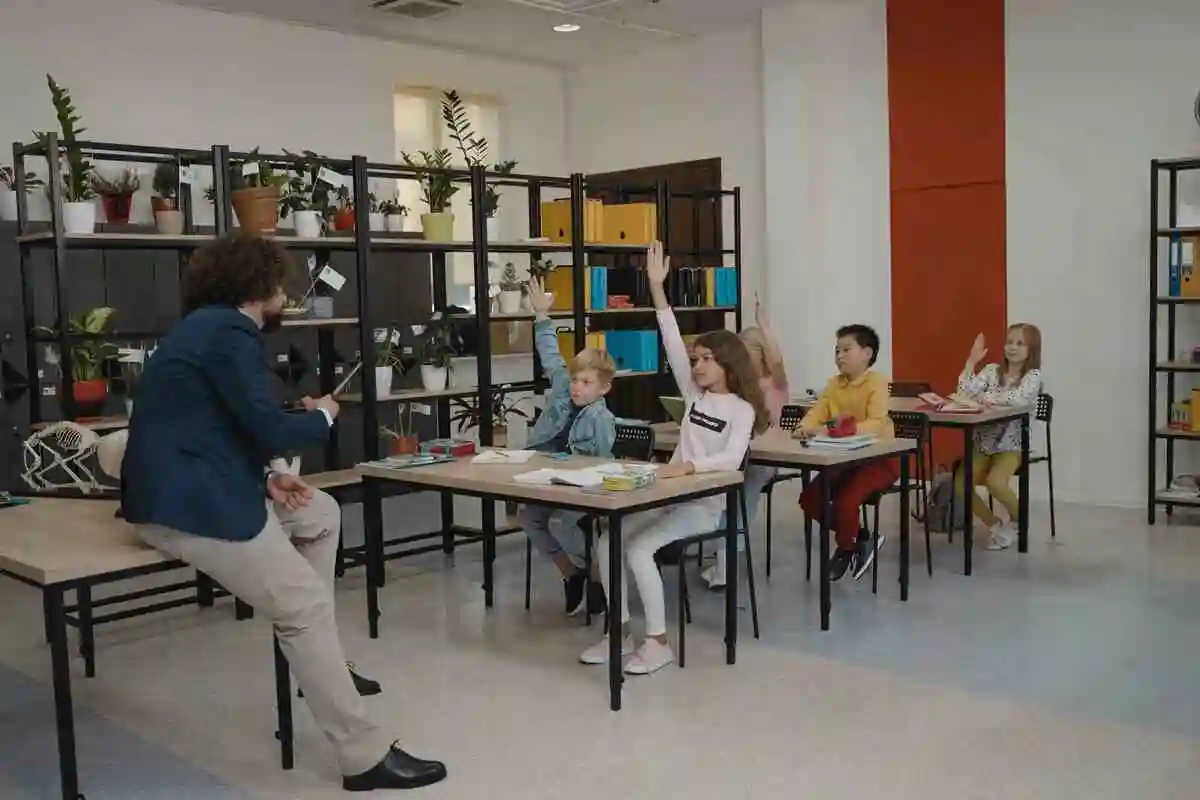
The experience of teaching at Buxiban is difficult to describe in one word. It is fun, tiring and educational at the same time. After school breaks in Taiwan, students come to these coaching centers to learn English, math or science. The experience of teaching at a Buxiban can be summarized as follows.
a. Who comes, what condition do they come in?
The classes for the younger students (6–12 years old) start in the afternoon, just after they have finished their school day. Most of the children are relaxed for the first ten minutes. But as soon as a song, a board game or a small competition starts, the class changes. At this age, it is more important to keep their attention than to teach.
The situation is the opposite for teenagers (13–18). They come with a specific goal: to do well in GEPT, TOEFL or school exams. There is less noise in the class, but fatigue and stress are evident on their faces. When working with them, you understand that in addition to explaining, it is also the teacher's responsibility to give a little encouragement.
b. What really happens in the classroom?
The unwritten rule of most buxiban is, learning should not be boring. So there are fewer lectures, more activities. The teacher has to play a role somewhere between an entertainer and a teacher.
But there is another side to it. Taiwan's education system is still largely rote and exam-based. As a result, there are quizzes almost every week, tests every month. If a student's results are bad, parents complain directly to the center, and that pressure falls on the teacher. Striking a balance between these two realities is the biggest challenge of working in a buxiban .
Is a TEFL certificate required to work at Buxiban?
There is no law that requires a TEFL to teach at Buxiban in Taiwan. It is not a requirement for a government work permit. However, the reality is a little different, reputable schools require 120 hours of TEFL/TESOL in their hiring policies, because it makes it easier to demonstrate the school's quality to parents.
What is actually mandatory
Instead of a certificate, the following are things that will not go through without an application:
A four-year bachelor's degree (any subject),
A passport from an English-speaking country or proof of equivalent English proficiency,
A police clearance issued by your home country.
For the nationality requirement, the recognized English-speaking countries are primarily the United States, United Kingdom, Canada, Ireland, Australia, New Zealand, and South Africa. English-proficiency test scores such as IELTS or TOEFL cannot replace this nationality requirement.
What's extra with TEFL
There are jobs available without a TEFL, especially in small-town schools or those looking for teachers quickly. But good chain schools, higher hourly rates, or bargaining power: certificate holders have the upper hand in these. In short, TEFL is not a requirement for entry, but a tool for getting a good offer.
What are the advantages of working at Buxiban in Taiwan?
The biggest attraction of teaching at Buxiban is that the doors are relatively open. These are private institutions, so there are no strict requirements for teaching licenses or educational degrees like in public schools. In most cases, you can start discussions if you have a degree and language skills.
The hiring cycle is not fixed
Public schools usually hire once or twice a year, coinciding with the academic session. At Buxiban, there is no such obligation. Just as student enrollment runs all year round, so does the search for teachers. As a result, it doesn't make much difference whether you apply in January or August.
The first half of the day is your own
Since students come after finishing their main school, classes start in the afternoon and continue until the evening. This leaves the morning completely empty. Some learn Chinese during that time, some travel, and some handle other work or tuition.
Visa and Income
Recognized Buxiban usually sponsors work permits for foreign teachers, meaning that legal accommodation is arranged through the institution. Along with this, there are opportunities for extra classes outside regular hours, summer programs, or private tutoring, which many people use to supplement their income.
Teaching Pressure
The curriculum and textbooks are usually set by the school, and class sizes are small. So the burden of designing lesson plans from scratch is not much on the shoulders of new teachers.
What are the challenges of working at Buxiban?
The benefits of Buxiban also have a flip side. These institutions are ultimately businesses, students are the buyers, and parents are the ones paying the bills. This reality is at the root of most problems.
a. The time table is upside down
The convenience of having free time in the morning comes at a cost in the evening and night. By the time classes end, it’s 9pm, so social time with friends or locals is lost. It’s not uncommon to have classes on Saturdays, and holidays usually fall on a day in the middle of the week, a day when everyone else is busy.
b. Teacher or performer?
Parents pay a hefty fee and want their children to enjoy the class. Caught between these two demands, many teachers have to play the role of entertainer as well as teacher. When class attendance drops or a parent complains, the pressure falls squarely on the teacher, whether the complaint is justified or not.
c. Only classroom hours are counted
Wages are usually calculated based on hours spent in class. Preparation, checking the notebook, talking to parents or writing reports, all these times are left out of the calculation. This is one of the biggest reasons for teachers' dissatisfaction.
d. Less space to teach in your own way
You have to follow the school's own syllabus and books, often by the page. For those who want to organize classes creatively, it can seem boring. The quality of the curriculum also fluctuates from institution to institution.
e. Tired classroom, tired teacher
Students come to school all day, with bags full of homework. As a result, it is difficult to maintain attention, discipline. Along with this, long shifts and repetitive routines, many people burn out after a year or two.
f. It is important to read the terms of the contract
Not all buxibans are the same. Some are professional and disciplined, while others have unclear contract terms, unclear overtime calculations or strict vacation rules. Before signing, read the terms carefully, and if possible, talk to a current or former teacher at that school — this is the most effective precaution.
Read More:
Salary and working hours?
The work schedule at a buxiban is not the same as in a public school, with classes starting at around 4 pm and continuing until 9 pm.
This is a five-day routine, with many institutions also having classes on Saturdays and Sundays. Direct teaching time is roughly 14–20 hours a week. However, this is not the total work; if you include lesson plans, checking records, and parent-related work, the real figure is around 25 hours. In return, you have the entire morning on your hands.
a. Income profile
The typical hourly rate is NTD 600–800. For experienced teachers at large chains or established language centers, it can reach NTD 1,000. Depending on hours and experience, it usually amounts to NTD 35,000 to NTD 70,000 at the end of the month.
What is the cost of living as an English teacher in Taiwan?
The cost of living and income for an English teacher in Taiwan present a fairly comfortable picture. Typically, monthly living expenses range from around NT 30,000 to NT 50,000 (approximately US1,000 to US1,600). Meanwhile, teaching English in the country can provide a monthly income of NT 50,000 to NT 70,000+ (or more), making it possible to cover living expenses while still saving a good amount of money.
Main Monthly Expenses
Housing or Rent: In major cities like Taipei, renting a private apartment or studio can cost around NT$15,000–25,000 per month. However, in smaller cities or when sharing a room, the cost can drop to around NT$8,000–15,000.
Food and Groceries: Eating at local restaurants and night markets can be quite affordable, with a meal typically costing around NT$100–300. Monthly food expenses may come to approximately NT$8,000–12,000.
Transportation: Using the MRT, buses, or a scooter can keep monthly transportation expenses relatively low, at around NT$1,000–2,000.
Utilities and Internet: Electricity, water, gas, and internet together may cost approximately NT$2,000–3,000 per month.
How to prepare before going to Taiwan?
Before traveling to Taiwan, you need to make necessary preparations such as a valid passport, visa or travel authorization, return ticket, hotel booking, and sufficient local currency or currency exchange. It is also important to fill out the Online Arrival Card and download the necessary apps.
Required documents and Passport: The passport must be valid for at least 6 months and have blank pages for the visa sticker.
Visa: Taiwan has no embassy or visa centre in Dhaka, and there is no tourist eVisa for Bangladeshi passport holders. Applications are processed through the Taipei Economic and Cultural Center (TECC) in New Delhi, India, usually by submitting your documents to an authorised agency in Dhaka that forwards them. Most applications require an invitation letter and a "V" number arranged by your host in Taiwan, so start at least 4–6 weeks early.
Online arrival card: Fill out the Taiwan arrival card online before traveling.
Financial Preparation Currency (TWD): The local currency of Taiwan is the New Taiwan Dollar (TWD). Exchange some dollars before going or upon arrival.
Cards and payment: Carry an international credit card or cash with you. It is convenient to collect an EasyCard or iPass for movement.
Is Buxiban the right choice for you?
If you like energetic classrooms, enjoy working directly with students, and want to gain experience in an Asian education environment, then Buxiban in Taiwan could be a good option.
It can be a valuable opportunity to build classroom experience, especially for new TEFL teachers.
However, for those who only want a traditional Monday-to-Friday daytime school schedule, Buxiban’s working pattern may not always be ideal. So it’s important to understand the contract, schedule, responsibilities, and employment conditions before taking the job.
Conclusion
Teaching English at a Buxiban (Cram School) in Taiwan can be an interesting opportunity for teachers interested in building an English teaching career abroad. Here, you will not only teach English; you will also gain important professional skills such as classroom management, lesson planning, cross-cultural communication and student motivation.
A good TEFL qualification, strong communication skills, patience, creativity and cultural adaptability can help you succeed in the Buxiban classroom. Before moving to Taiwan, do proper research on job requirements, work authorization, contract terms and living costs. With the right preparation, the Buxiban teaching experience can become a valuable and memorable part of your international teaching career.