 by UNI-Prep Institute · Updated September. 29, 2026
With the expansion of remote work and the growing demand for online education, the digital nomad lifestyle has now become a realistic career option. Especially for people skilled in the English language, the opportunity to earn income from outside a permanent office is more accessible than ever before.
However, succeeding on this path requires proper planning and at least one relevant qualification or certification. It's also extremely important to know which countries are most suitable for nomads, what the income potential looks like, and what challenges you might face. So in today's article, we will discuss:
What is a digital nomad?
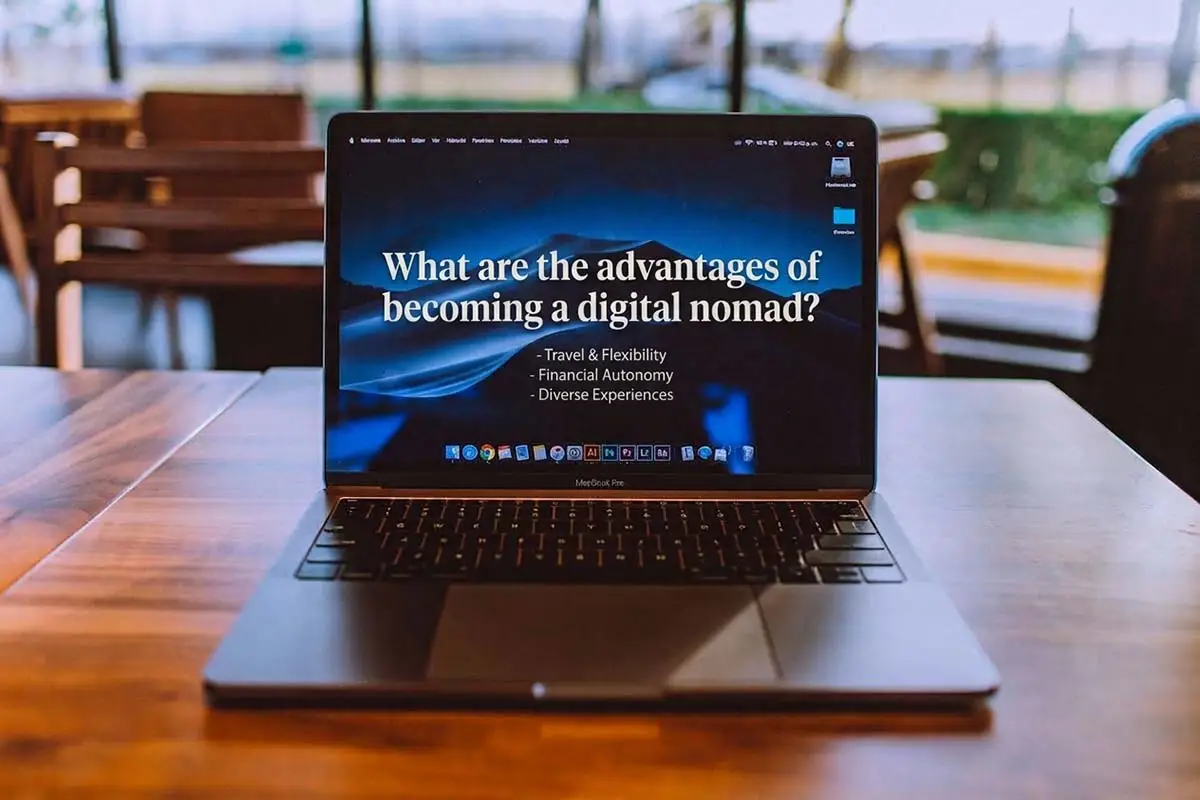
What are the advantages of becoming a digital nomad?
What qualifications are needed to become a digital nomad?
How do digital nomads earn income, and how much do they make per month?
The top 5 digital nomad-friendly countries
Challenges you may face as a digital nomad
5 tips for new nomads
If you want to become a digital nomad teaching English online, we hope today's article will be extremely helpful for you.
What is a digital nomad?
A Digital Nomad is a person who works entirely online or remotely and, instead of staying permanently in one place, keeps traveling from one country to another or one city to another. In other words, they take their laptop and internet connection with them and turn the entire world into their office.
Main characteristics of digital nomads
Geographic freedom: They aren't tied to any fixed office or desk. Today they might be working from a café on a beach in Bali, and next month from a coffee shop in a historic European city.
Type of work: They typically earn their living through freelancing, software development, online teaching, content writing, digital marketing, or any remote job.
Travel and lifestyle: They don't travel like tourists for just a few days. They usually stay in one place for a few weeks or months, enjoy the local culture there, and continue their work alongside it.
Dependence on technology: A good laptop, a smartphone, and high-speed internet are the main tools of their survival.
For example, suppose you are an online English teacher. All your students are in Japan, but you're currently sitting on an island in Thailand taking classes on your laptop. Three months later you move to Portugal and continue teaching from there. This lifestyle is what it means to be a digital nomad.
What are the advantages of becoming a digital nomad?
The biggest advantage of becoming a digital nomad is the complete freedom to work from any place of your choosing using the internet. The main benefits of this lifestyle can be divided into a few categories:
Freedom of lifestyle and exploration
Instead of being stuck in one particular city or country, you get endless opportunities to work from any corner of the world and explore new countries. It's not just about sightseeing like a tourist — you get to live among people from different countries and experience their culture and lifestyle up close. You can enjoy your preferred weather all year round. For example, if you don't like winter, you can move to a tropical country during the cold season.
Professional and financial advantages
This is one of the biggest advantages for digital nomads. If you earn in dollars or euros from clients in Europe or America and spend it while living in a lower-cost country like Thailand, Bali, or Vietnam, it becomes very easy to save a significant amount of money.
Moreover, there's no strict 9-to-5 office routine here. You can work at your own convenient time while keeping project deadlines intact, which leaves plenty of time for traveling alongside work. Additionally, by joining co-working spaces and nomad communities that have sprung up worldwide, you can network and connect with internationally accomplished professionals.
Personal development
Having to adapt to entirely new and unfamiliar environments greatly increases a person's communication skills, problem-solving ability, and self-confidence. Also, since the work environment keeps changing instead of staying within the same office or four walls every day, creativity and productivity at work tend to increase.
Beyond the core benefits of the digital nomad lifestyle, there are several other wonderful and practical advantages that make this way of life even more appealing to the younger generation:
Tax savings: Many countries around the world today (such as Croatia, Greece, Italy, or Malta) offer special tax breaks or zero-tax benefits to attract digital nomads. This makes it possible to legally save a lot of money on taxes from international income as well.
Personal wellbeing and mental health: Being a digital nomad frees you from the 9-to-5 traffic jams, office politics, and the mental stress of the same daily routine. Since you get the opportunity to spend time at the beach or in the mountains between work, mental health tends to be much better. As soon as you close your laptop, you can head straight to a new tourist spot or recreational area. As a result, there's no wall between work and personal life.
Minimalist or simple living: Since nomads have to travel constantly, they only keep as much stuff as fits into one or two suitcases. This eliminates the extra expense and mindset of buying unnecessary gadgets, expensive furniture, or excess clothing. Rather than accumulating material things, creating new memories, experiences, and relationships with people becomes the priority for nomads.
What qualifications are needed to become a digital nomad?
If you want to travel to different countries as a digital nomad while teaching English online, you'll need certain academic qualifications, language skills, and technical preparation. The necessary qualifications are discussed in detail below:
1. Educational and professional qualifications
TEFL or TESOL certificate: Having an internationally recognized certificate is the most important requirement for teaching English online. Completing at least a 120-hour TEFL course makes it much easier to get work on quality platforms worldwide. You can take an online TESOL/TEFL course through Uni-Prep Institute if you'd like.
Bachelor's degree: Many reputable online teaching platforms or institutions require a bachelor's degree in any subject. However, there are also opportunities to work on freelancing marketplaces or certain specific platforms even without a degree.
2. Language skills
Since you'll be teaching English, you need native or near-native proficiency in speaking, writing, and grammar. Clear pronunciation and the ability to express the language in simple ways are essential for making yourself understood by international students.
3. Technical qualifications and equipment
Since digital nomads constantly change locations, you must have the following technical facilities with you:
-
High-speed, stable internet: An uninterrupted, high-speed internet connection is mandatory for video classes.
Suitable devices: A good-quality laptop or computer and a good-resolution webcam.
Noise-canceling headset: A good headphone with a microphone for clear speaking and listening.
-
A quiet environment: You need to ensure the background looks calm and professional while taking classes.
Other qualifications for the nomad lifestyle
Visa and financial proof: To stay in various countries as a digital nomad, you may need to obtain that country's Digital Nomad Visa, which often requires proof of income.
Personal skills: To teach classes across different time zones, you need excellent time management, self-discipline, and the mentality to adapt to any new environment.

How much do digital nomad teachers earn?
A digital nomad teacher basically uses the internet and a laptop to earn income by teaching students remotely from anywhere in the world. Generally, based on work experience and hours, they can earn between $1,000 and $4,000 or more per month. Below are the main ways digital nomad teachers earn, along with details of their income.
How digital nomad teachers earn
1. Online ESL (English as a Second Language) teaching: There is enormous global demand for teaching English as a second language. Teachers who earn a TEFL/TESOL certificate from a recognized institution like Uni-Prep Institute teach English on various international platforms. Some popular platforms include Preply, Italki, Cambly, and VIPKid.
2. Online tutoring and specialized subjects: School and college academic subjects such as math, science, coding, or various languages are taught online. Teachers earn as freelance instructors by joining USA-based platforms like Wyzant or other global platforms.
3. Curriculum design and content writing: Along with taking live classes, many experienced teachers earn by creating lesson plans, designing quizzes, and writing course scripts for various educational institutions or edtech apps.
4. Selling online courses and digital products: By selling their own recorded courses, e-books, or study guides on platforms like Udemy or Coursera, teachers build long-term passive income.
Income amounts and rates
A digital nomad teacher's income mainly depends on the type of work, experience, and which country's students they are teaching:
Type of work |
Average hourly rate (USD) |
Potential monthly income (USD) |
New / entry-level teacher |
10 – 20 |
1,000 – 1,500 |
Experienced and certified teacher |
22 – 40 |
2,000 – 3,500 |
Private clients and content creator |
40+ |
4,000+ |
If teachers can teach students from developed countries directly on a private basis, the income amount can be even higher.
The top 5 digital nomad-friendly countries
Remote work opportunities are increasing day by day, and along with them, the number of digital nomad visas is also increasing. Currently, more than 50 countries worldwide offer some form of nomad visa. But not all countries are equally advantageous. In terms of visa ease, cost, internet speed, safety, and community, these 5 countries are ahead.
1. Georgia: The easiest entry
Citizens of most countries can stay for 365 days without any visa. There's also no need to apply separately for a nomad visa. There's no income tax on income earned from foreign sources. Monthly expenses are typically $1,100–$1,800. Additionally, it's in a time zone between Europe and Asia (UTC+4), making it convenient for working with European clients. It has a rich food and wine culture, and costs are relatively low.
2. Thailand: Affordable and an established nomad hub
The Destination Thailand Visa (DTV) is valid for 5 years, allows staying for 180 days at a time, and can be extended. Monthly expenses in Chiang Mai are around $1,200. It has Asia's oldest and most densely populated nomad community (Chiang Mai). There are plenty of co-working spaces and cafés. Food is cheap and of good quality, and the old hassle of border runs has largely been reduced now thanks to the DTV visa.
3. Indonesia (Bali): The largest nomad community
The Second Home Visa allows staying for 5 to 10 years, with no tax on foreign income. However, the condition is that you must show around $130,000 in a sponsored bank account. Monthly expenses in Canggu/Ubud are $1,200–$1,800; in slightly less popular areas (Lombok, non-touristy Bali) it's possible to go below $1,200. This is the world's largest and most active digital nomad community, with a wonderful blend of wellness, nature, and creative culture. There's also no shortage of networking events, mastermind groups, and international events.
4. Malaysia: Asia's underrated option
In Kuala Lumpur, monthly expenses are typically $1,300–$1,600. English is widely spoken, so there's almost no language barrier. It's one of the fastest internet speed countries in Asia. Its safety score is very good, placing it in the top position along with Thailand and Romania.
5. Portugal: Europe's gold standard
Here you can go on the D8 visa. However, you need to show around $3,300 in monthly income, and it opens the path to residency and eventually citizenship. Monthly expenses in Lisbon are around $2,000–$3,500, though somewhat lower in other cities. Going to Portugal gives you the opportunity for free movement throughout the entire EU. It offers legal stability and a clear path to long-term residency. In terms of safety, climate, and quality of life — it's strong in every respect.
Challenges you may face as a digital nomad
Teaching English online as a digital nomad is as exciting and independent a profession as it is, it also comes with certain specific challenges or problems. The main challenges are outlined below:
1. Time zone differences This is the biggest challenge for digital nomads. Your students might be in Asia or Europe, while you might be traveling in South America. To take classes at times convenient for students, you may have to wake up in the middle of the night or early morning to teach.
2. Stable internet connection Video and audio need to be perfectly clear in online classes. If there's constant buffering or the connection keeps dropping, students get annoyed and platforms impose penalties. Not every country or every hostel has good-speed Wi-Fi. There's a risk of missing classes due to sudden power outages or internet disruptions. You always need to keep a local SIM with high-speed data or a portable router as backup.
3. Lack of a suitable work environment Teaching English requires a quiet, noise-free place with good lighting. It's impossible to take classes while sitting in a café, hostel, or shared space due to background noise. This forces you to spend extra money on a good private room or co-working space.
4. Income instability and intense competition There are millions of teachers worldwide on online teaching marketplaces. Finding students at the start is quite difficult. Also, during school holiday seasons or festival times, students cut back on classes, which can significantly reduce income during those periods.
5. Visa and legal complications There are certain legal obligations involved in staying in any country as a traveler for a long time and working remotely from there. Working on a regular tourist visa is illegal in many countries. However, many countries have now introduced digital nomad visas. But these visas require proof of a specific amount of monthly income, which can be difficult for new teachers.
6. Strict certification and qualification requirements If you want to teach at a good online school or foreign platform for good pay, simply being able to speak English isn't enough. Most good platforms now mandatorily look for TEFL or TESOL certification. Without these, it's difficult to get quality or higher-paying work.

5 tips for new nomads
To start your career as a new digital nomad English teacher, selecting the right platform, ensuring a reliable internet connection, and setting up international payment methods are the most important things. The following 5 tips will help you the most in becoming a successful online teacher and living the nomad life:
1. Choose the right teaching platform and global marketplace To find students worldwide online, you need to create a profile on good platforms. You can work in two ways to start:
-
Online language schools: You can join as a teacher on sites like iTalki, Preply, or Cambly. They'll help you find students themselves.
-
Freelance marketplaces: You can create gigs or projects on Upwork or Fiverr around your teaching skills, such as IELTS preparation, business English, or spoken English.
2. Build a specific "niche" or specialty Being skilled in a specific subject rather than general English teaching gets you better pay and faster clients. For example: teaching English for IELTS, TOEFL, or SAT, or teaching presentations, email writing, or interview English to corporate professionals. Designing special courses just for kids (Kids English) or for adult learners can also help you find students relatively quickly.
3. Ensure backup internet and a suitable work environment As a digital nomad, when you travel from one place to another, maintaining your class quality can be challenging. Try to stay in places that always have high-speed Wi-Fi while traveling. Always keep a portable pocket router or local SIM card as backup, so that classes aren't disrupted even if the main internet goes down. Use a noise-free environment and a good-quality noise-canceling headphone.
4. Set up global payment methods and banking To easily and cost-effectively bring money home from foreign students, set up an international payment gateway from the start. Open and verify a Payoneer or Wise account to receive payments from freelancing platforms or directly from clients. Link these to your local bank account to easily withdraw money in your own country.
5. Use time zone management and booking tools One of the biggest challenges for digital nomads is teaching students in different time zones across various countries. Use a scheduling tool like Calendly so students can easily book classes by seeing your free time. It will automatically match your class times according to the student's local time. When planning your travels, make sure your travel schedule doesn't conflict with your class times.
Conclusion
Teaching English online as a digital nomad is not just a profession, but an entire lifestyle philosophy, where professional freedom, financial stability, and the experience of traveling the world can all be found together. In this article, we've seen how an aspiring teacher can begin this journey through the right certification, choosing the right platform, and technical preparation.
However, as exciting as this lifestyle is, it demands equally realistic planning. Being prepared in advance for handling time zone differences, ensuring stable internet, dealing with income instability, and avoiding visa-related complications makes the digital nomad life much easier and more enjoyable.
The first and most important step in this journey is obtaining a recognized TEFL/TESOL certification, without which it's difficult to get good-paying work on quality platforms. Through Uni-Prep Institute's online TEFL/TESOL course, you can earn this internationally recognized certificate from home, the first and surest step toward finding students worldwide and building an independent, profitable career.