 by UNI-Prep Institute · Updated August. 20, 2026
Speaking practice is a very important part of learning English. If you go about it the right way, you can become skilled at spoken English quite easily. Since English is used as a common language in most countries of the world, your English skills will undoubtedly help you in many ways. The more fluent you become in English, the more your career prospects will improve. Besides, there is also a chance of getting higher education or other opportunities abroad.
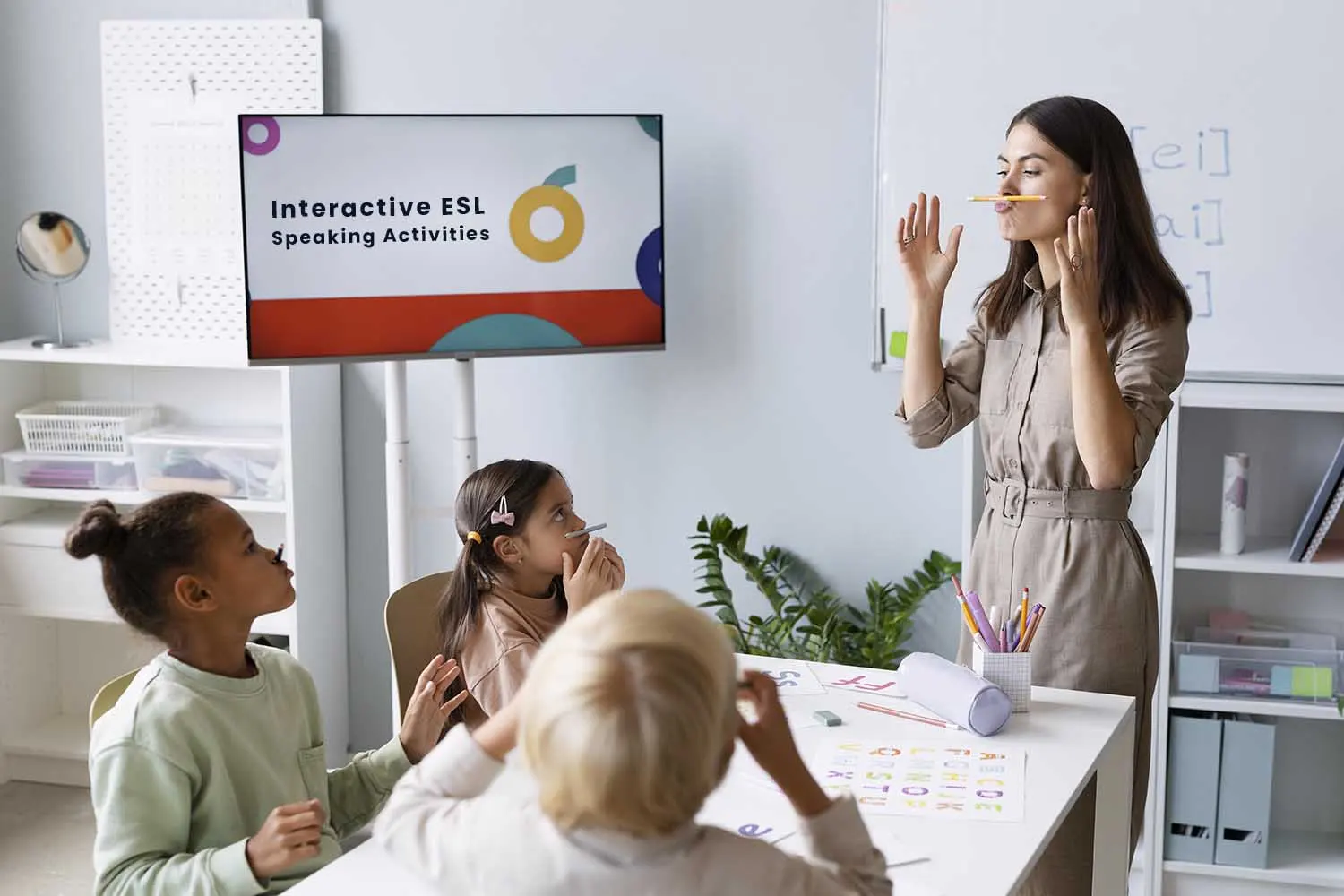
So no matter what stage of life you are in, trying to improve your spoken English skills will create new opportunities for you in the days ahead. And if you want to get better at spoken English, the 8 ways described below will help you even more.
1. Role Play
Role play is a process where you set aside your own natural identity and behavior and take on the role of a specific imaginary character, a professional, or another person, then speak and act accordingly. It is widely used in education, drama, psychological practice, and entertainment.
To do this in class, pair up two students, hand them a scenario card that describes the situation and each character's goal, then give them five minutes to think through what they will say. After that, ask them to give a short performance in front of the class. You will see that their shyness fades and many of them carry the dialogue forward naturally.
2. Information Gap
An information gap is a situation where one person has information that the other person needs but does not have. The urge to fill this gap forces people to talk to each other or communicate. It is a powerful medium for both language learning and real communication.
Suppose one person has a train schedule with some boxes left blank, and the other person has the information for those blank boxes but has blanks elsewhere. Now the two of them must complete the whole table together, only through conversation. The beauty of this structure is that speaking here is not optional, it is the only way to finish the task. As a result, even the shyest student is forced to open their mouth, form questions, and listen carefully to the answers.
3. Fishbowl Discussion
A fishbowl discussion is a special group discussion technique where the main conversation happens in an inner circle, while the members of the outer circle listen quietly. This process of quietly listening or observing from the outer circle greatly helps build confidence and courage in new or shy members.
For students who are afraid to speak directly, this method works like a bridge. First, they observe how others use language and structure their arguments, prepare their own answers mentally, and when their turn comes, they start speaking far more prepared than before.
4. Taboo Speaking Game
Taboo speaking is a very fun and effective game to improve the vocabulary and speaking skills of ESL (English as a Second Language) students. In this game, a student has to explain a key word or term to the other members of their team without using taboo words.
Divide the students into small groups. Make cards by writing a key word (e.g. Apple) and 3-4 taboo or forbidden words (e.g. Fruit, Red, Eat) below it. One player will pick up a card and try to get the rest of the team to guess the key word without saying the forbidden words. If they say a taboo word or use a part of the key word, the turn will be canceled and the other team will get a chance.
5. Story Chain
A story chain is a game where everyone together creates a fun story. One person starts the story with a line or sentence. The next person adds another sentence to it. This way, taking turns, everyone moves the story forward together.
In this game, a student starts a story with just one sentence, maybe "One morning, Alex found a mysterious box." The next person has to move the story forward by adding their own sentence, then the third person, then the fourth, and this way the whole group together creates an unexpected, often funny story.
Here, every student has to listen carefully to the previous sentence, think of a logical next part instantly, and say it right away, with no time to prepare. This habit of thinking and speaking quickly gives the closest experience to real conversation.
6. Debate
To defend your position in a debate , you have to organize specific information, theory, and arguments. In the face of the opponent's attack, you have to stay calm, spot the flaws, and give fact-based counter-arguments.
Choose a debatable topic, such as "should mobile phones be banned in schools," and divide the class into two groups, one group will argue for it, the other against it. Give each group some time to organize their arguments, then ask them to present those arguments in front of each other and respond to the opposing side.
Through debate, students not only gain the courage to speak, but also master language structures for expressing opinions and refuting arguments, such as "In my opinion...", "I completely disagree because...", "That's a fair point, but...", which are also useful in everyday conversation.
7. Picture Prompt
From seeing to speaking, or turning a still picture into something that talks with the help of AI, is what Talking Photo or lip-sync technology does. By uploading a picture and giving a text or audio prompt, you can easily turn the picture into something that comes alive and talks.
Show an interesting or mysterious picture and ask, "What do you think is actually happening here?", "What is going through this person's mind right now?", "What might happen next?" There is no specific answer here, so students are forced to use both their imagination and their language knowledge to form sentences spontaneously.
The biggest strength of this activity is its simplicity. No script is needed, no complicated preparation is needed, yet it lets students practice turning their thoughts directly into spoken language.
8. Peer Interview
A peer interview is a process where two people sit face to face and openly discuss their life stories, experiences, and way of working. Through this, the relationship between them deepens and they get to know each other better.
For example, pair up the students and ask them to interview each other, asking about their hobbies, family, dreams, and future plans. Then ask each student to stand in front of the class and introduce their partner: "This is Rima. She loves painting and wants to become an architect someday."
In this activity, two skills are practiced at once: forming questions correctly (question formation) and reporting what a third person said , which usually feels quite dry when taught separately, but becomes a lively task this way.
Tips to Make These ESL Speaking Activities Successful
Creating a safe environment is the most important thing. Right from the start, tell students clearly that making mistakes is a normal part of learning, not something to be ashamed of. Setting a time limit is also effective, because when time is short, people stop thinking about perfect sentence structure and start speaking directly, and this spontaneity is what actually builds fluency. In a large class, it is hard to give everyone a chance to speak, so dividing them into small groups of three or four gives each student more time to talk. And most importantly, do not correct mistakes in the middle of someone speaking, because it breaks their confidence. Instead, take notes, and discuss the mistakes generally in front of everyone after the activity ends.
Final Thoughts
Speaking skills aren't built overnight. They're built through repeated practice and confidence that grows little by little. The activities mentioned above can be practiced not just in the classroom, but also in online sessions, or even among two or three friends on your own. Remember, before speaking perfect English, the habit of speaking fluently is what matters most. The more you speak, the more mistakes you make and correct, the faster your speaking confidence and fluency will grow.
Many more interactive and effective speaking activities like these, along with lesson planning strategies and classroom engagement techniques, are taught in detail in our TEFL course. If you want to become a more skilled English teacher and make your classroom more lively, you can explore our courses to learn more.