 by UNI-Prep Institute · Updated September. 25, 2026
Making mistakes is a natural part of learning a language. Especially in an English language classroom, students are bound to make mistakes with grammar, vocabulary, pronunciation, or sentence structure. However, if a teacher corrects a student's mistakes the wrong way, even a confident student can gradually become quiet, stop asking questions, and even start thinking of themselves as weak in English.
That's why an effective teacher's job isn't just to point out mistakes, but to correct them in a way that helps the student understand the error while keeping their confidence and enthusiasm for learning intact. Knowing when to correct, how to correct, and which mistakes can wait rather than being addressed right away is what turns an ordinary teacher into a skilled one. So in today's article, we'll discuss 17 such effective techniques that ESL teachers around the world have used in their classrooms to succeed. Let's get to know them…Making mistakes on the path to learning a language is a natural thing. Especially in an English language classroom, students will inevitably make mistakes in grammar, vocabulary, pronunciation, or sentence structure. However, if a teacher corrects a student's mistake the wrong way, even a confident student can gradually become withdrawn, stop asking questions, and even start thinking of themselves as "weak in English."
So the job of an effective teacher isn't just to point out mistakes, but to correct them in a way that helps the student understand the mistake while keeping their confidence and eagerness to learn intact. Knowing when to correct, how to correct, and which mistakes can wait rather than being addressed immediately, this is exactly what turns an ordinary teacher into a skilled one. So in today's article, we'll discuss 17 such effective techniques that ESL teachers around the world have used in their classrooms to make themselves successful. Let's get to know them…
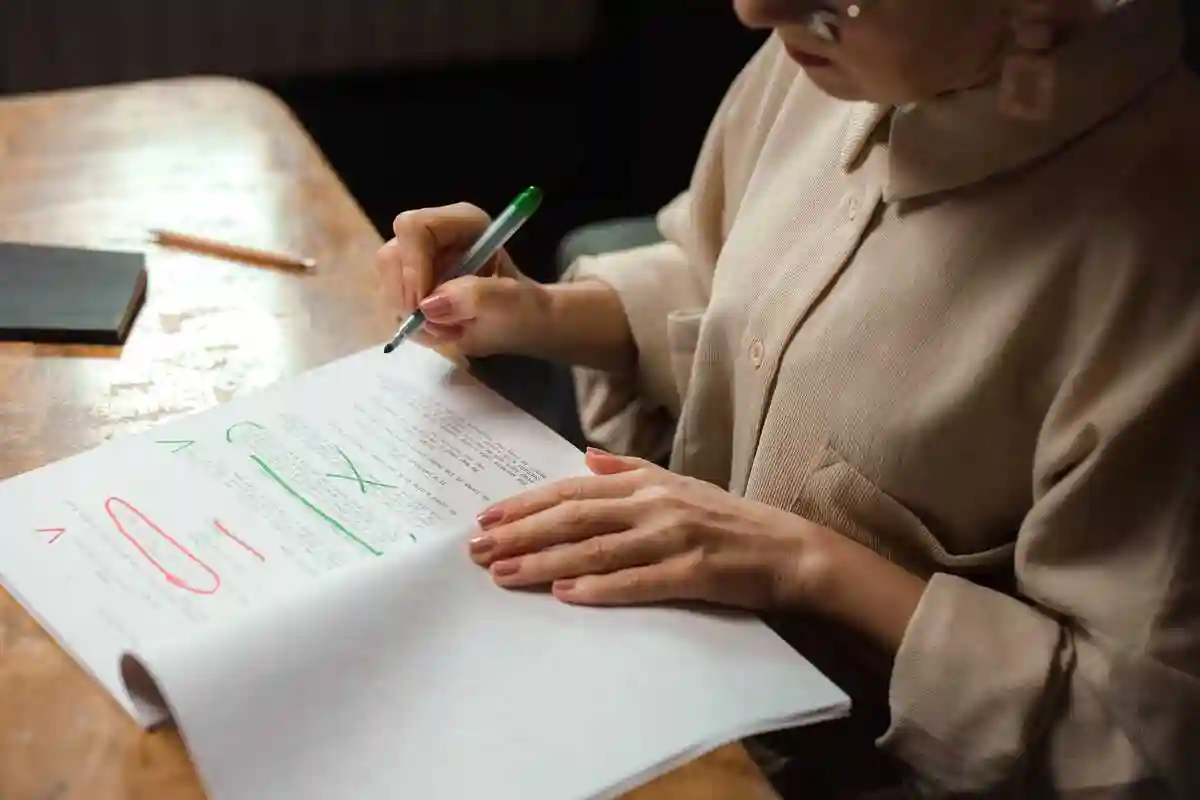
1. Understand the Difference Between "Error" and "Mistake"
To correct mistakes without discouraging students, it is very important to understand the difference between "Error" and "Mistake." When a teacher can distinguish between these two, they can understand when a student needs 'medicine' and when just a 'warning' will suffice. As a result, students can learn the language easily without feeling embarrassed.
Generally, when a student has not yet learned or understood a rule, it can be called an Error. This happens due to a gap in grammar or rules. The error gets resolved once the teacher explains the rule again. In the case of an Error, if the student says something wrong, the teacher should repeat the correct sentence. For example: if a student says "He go," the teacher can say "Yes, he goes to school." That is, praise the student's effort before correcting the mistake.
When a student knows the rule but makes a mistake due to carelessness, that is a mistake. The reasons for this include: fatigue, lack of attention, or being in a hurry. In this case, the student can identify and correct their own mistakes. If it is a mistake, instead of stopping the student directly, give them the opportunity to correct the mistake on their own. When a student is trying to speak fluently, instead of interrupting them repeatedly, discuss the mistakes after they finish speaking.
Making mistakes is a completely natural process in language learning. If a teacher understands this, it becomes possible to teach English easily while keeping students' confidence intact.
2. Use Positive Language Instead of Negative Words
The way a teacher uses correction language has a major impact on a student’s emotional response. Comments such as “Wrong!”, “No!”, “You are bad at English,” or “You should know this” can embarrass students and reduce their confidence.
Instead, teachers can use words that provide encouragement along with correction. For example, “Almost there,” “Good attempt,” “Let’s try that again,” “You’re close,” or “Can you think of another answer?”
For example, if a student makes a grammar mistake, the teacher can say, “That’s a good sentence. Let’s make one small change.” This small change can turn correction from a negative experience into a positive learning experience.
3. Do Not Correct Every Mistake Immediately
Correcting every grammatical mistake immediately during a speaking activity is not always a good strategy. When a student is trying to express their idea, interrupting them repeatedly can disrupt their communication flow.
Suppose a student is talking about their daily routine for two minutes. They make several tense mistakes. If the teacher stops them after every mistake, the student may become nervous and eventually lose interest in speaking.
Instead, the teacher can note down the mistakes and discuss the common mistakes after the speaking activity. This allows the student to speak uninterrupted and also gives them an opportunity to correct their mistakes later.

4. Give Private Feedback Instead of Embarrassing Students in Front of Everyone
A student’s mistake should not be highlighted in front of the class in a way that makes them feel embarrassed or humiliated. Public criticism, especially regarding sensitive areas such as pronunciation or speaking, can have a long-term impact on a student’s confidence.
For example, instead of saying, “James, you always make this mistake,” the teacher can say, “I noticed one small pattern in your sentences. Let’s practice it together after class.”
This helps the student understand that the teacher is not humiliating them but is helping them improve. If necessary, the teacher can correct the student privately or use an anonymous example to teach the same point to the entire class.
5. Give Students an Opportunity to Find Their Own Mistakes
If the teacher always provides the correct answer, students may simply remember the correct answer. But if they are given an opportunity to find their own mistakes, their critical thinking and self-correction skills will develop.
For example, if a student says, “He go to school,” instead of directly saying “He goes to school,” the teacher can ask, “The subject is ‘He’. Do we need to change the verb?”
Or the teacher can say, “Can you check the verb?”
This encourages the student to think independently and try to find the correct form. This habit of self-correction will help students identify their own language errors without the teacher’s help in the future.

6. Change the Correction Strategy According to the Type of Mistake
All types of mistakes should not be corrected in the same way. The correction strategy for a grammar mistake may not be the same as the correction strategy for a pronunciation mistake.
If a student makes a pronunciation mistake, the teacher can pronounce the word slowly and clearly and ask the student to repeat it. In the case of a grammar mistake, the teacher can provide a hint or guiding question. For a vocabulary mistake, a simple synonym or context-based explanation can be given.
Again, if there is a small grammar mistake during a fluency activity, it can be ignored at that moment and discussed later.
Therefore, before correcting a mistake, the teacher should ask themselves: “Is it necessary to correct this mistake right now?” If the mistake does not interfere with communication, correcting it later may be better.
7. Consider the Student’s Age and English Proficiency Level
The same correction method will not be effective for all students. Giving too much correction to a beginner learner may confuse or overwhelm them. On the other hand, more detailed accuracy can be expected from an advanced learner.
For beginner students, simple language, short feedback, and more encouragement are necessary. Instead of showing them many grammar errors at once, it is better to work on one or two of the most important errors.
For advanced learners, teachers can provide more detailed feedback on sentence structure, word choice, pronunciation, fluency, and grammatical accuracy.
In other words, effective correction should always be learner-centered. When feedback is given according to the student’s current level, correction becomes more meaningful.
8. Present Mistakes as a Natural Part of Learning
Students should first be made to understand that making mistakes is a natural and necessary part of learning. When a student tries to use a new grammar rule, vocabulary, or sentence structure, making mistakes is not unusual. Rather, through mistakes, students can understand which areas require more practice.
If a student says, “She go to school every day,” instead of directly saying “Wrong!”, the teacher can say, “Good try! Let’s check the verb again.” This helps the student understand that their effort is valuable and that only a specific part needs correction.
This type of approach creates a positive learning mindset among students. They learn that mistakes do not mean failure; rather, mistakes are a step toward improvement. As a result, they become more confident in using new sentences and speaking in English.

9. Use Peer Correction Properly
Peer correction gives students an opportunity for collaborative learning. One student can check another student’s sentence or answer and provide constructive feedback.
However, it is important to establish classroom rules before using peer correction. Students should be taught that the purpose of peer correction is not to prove that someone is “wrong,” but to help them.
For example, the teacher can say, “Let’s help our partner improve this sentence.”
Then two students can check the sentence together. This type of activity can improve students’ communication skills, teamwork, and confidence.
10. Turn One Student’s Mistake into a Learning Opportunity for the Whole Class
The entire class can learn from one student’s mistake. However, for this, it is better not to reveal the student’s name or identity.
For example, the teacher can write on the board:
She go to school every day.
Then the teacher can ask, “What should we change in this sentence?”
Now the entire class can think and provide the answer. The student who made the mistake can learn the correct form without embarrassment.
This strategy is particularly effective in grammar, vocabulary, and writing lessons.
Read More:
11. Praise the Student’s Progress
During correction, the student’s previous progress should also be considered, not just their current mistakes. This helps students understand that their effort is being noticed by the teacher.
Suppose a student previously made tense mistakes in almost every sentence. Now they are making only one or two mistakes. The teacher can say, “You’ve improved a lot. Your tense mistakes are much fewer now.”
This type of feedback motivates students and encourages them to practice more.
Progress-based feedback is especially important because not all students learn at the same pace.
12. Give Students an Opportunity to Practice Again After Correction
Simply pointing out a mistake does not complete the learning process. Students need to be given an opportunity to use the corrected form again.
For example, the student says:
“She go to school.”
The teacher asks:
“She…?”
The student says:
“She goes to school.”
Then the teacher can say, “Excellent. Now make another sentence using ‘goes’.”
In this way, the student is not only hearing the correct form but also using it themselves. This repeated practice helps students remember the new language pattern.

13. Develop a Growth Mindset Among Students
Teachers should help students understand that language ability can improve through practice. A topic that seems difficult today may become easier in the future through regular practice. There is a big difference between “You can’t do it yet” and “You can’t do it.” The first sentence creates the possibility of future improvement.
The teacher can say, “You’re still learning this structure, and you’ll get better with practice.” This type of language helps students view mistakes not as permanent failures but as temporary learning challenges.
14. Create a Safe and Supportive Classroom Environment
The foundation of all correction strategies is a safe classroom environment. If students feel that their classmates will laugh at them or the teacher will humiliate them when they make mistakes, they will not try to speak in English.
Therefore, teachers should create a supportive classroom culture from the beginning. Students should be taught that no one should be laughed at for making mistakes and that everyone’s learning journey is different. The teacher can say, “In this classroom, mistakes are okay. We learn from them.”
When students understand that it is safe to make mistakes in the classroom, they will ask more questions, speak more, and feel more confident using new vocabulary and grammar structures.
Conclusion
Correcting students' mistakes is one of the most important responsibilities of an English teacher. But the goal of correction should never be to prove a student wrong. It should be to give them a better opportunity to learn.
A skilled teacher knows when to pause, how to phrase things, and which mistakes need immediate attention versus which ones can wait. Positive language, private feedback, opportunities for self-correction, specific comments, and recognition of progress. These small habits are what transform a classroom.
Most importantly, students need to internalize the belief that making mistakes isn't failure. It's simply a natural step on the path to learning.
It's not just about correcting errors. The real skill that separates an average teacher from a truly great one is understanding a student deeply while keeping their confidence intact. If you'd like to build these skills further, check out our TESOL courses .